
SU–BIOGRIP–CAF Isotope Geochemistry Course and MC-ICP-MS launch
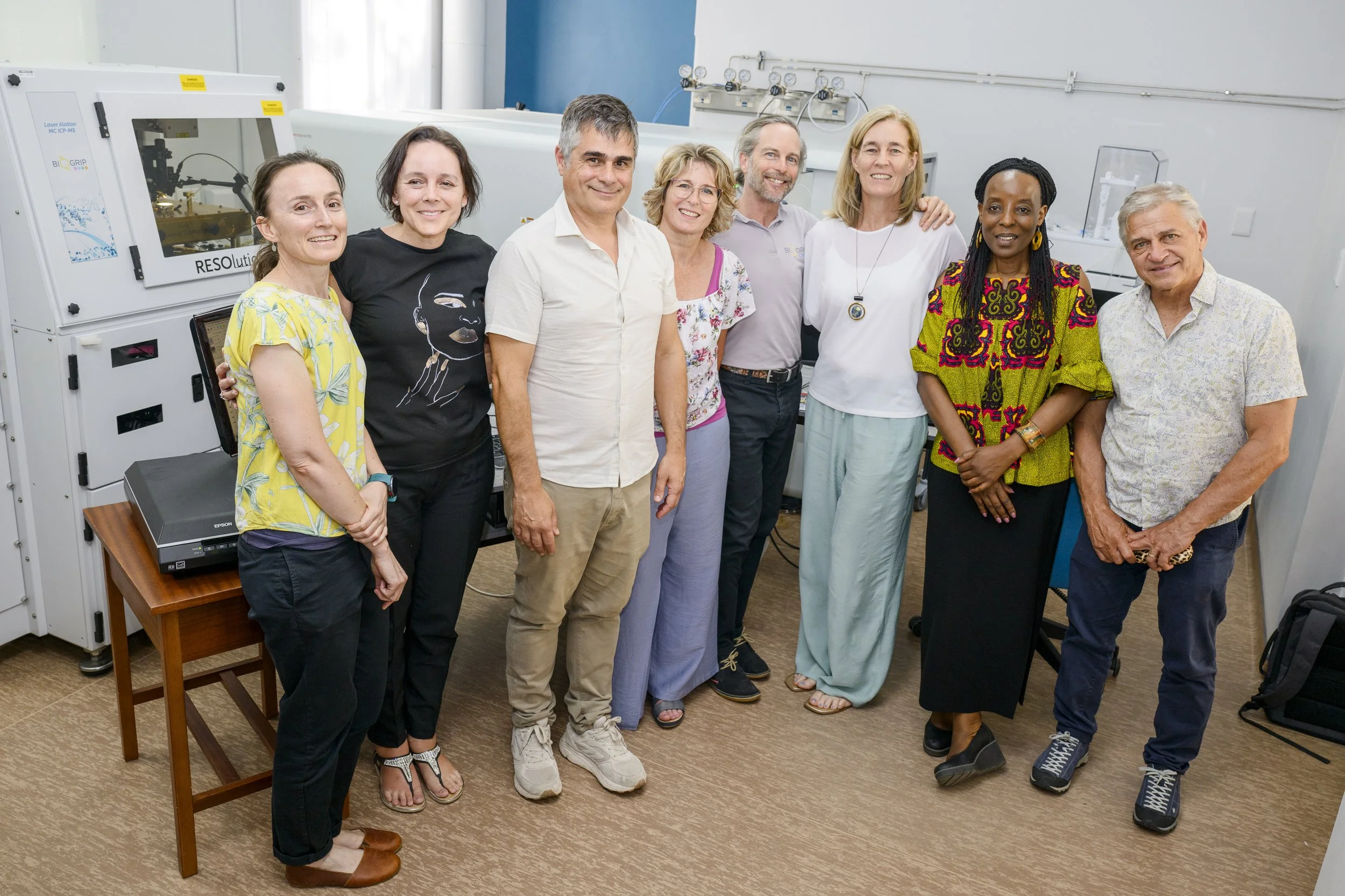
Attendees at the MC-ICP-MS laboratory from left: Sibusiso Moyo (SU), Judy Sealy (UCT Archaeology), Phil Janney (UCT Geological Sciences), Suzanne Grenfell (SU Geography), Cathy Clarke (SU Soil Science) and Cristiano Lana. Right photograph, from left: Janine Colling (SU BIOGRIP), (Maxime Chalmers van den Berg) Anatech, Cristiano Lana, Riana Rossouw (SU Earth Science), Roger Diamond (UCT BIOGRIP), Liza Rohland (Anatech), Sibusiso Moyo, Gary Stevens (SU Earth Science/CAF). Photo: Stefan Els.
Professor Cristiano Lana of the BIOGRIP Water and Soil node, in partnership with the Central Analytical Facility (CAF), hosted an Isotope Geochemistry and Instrumental Applications Workshop from 1–3 December 2025 at the Department of Earth Sciences at Stellenbosch University. The workshop brought in 12 attendees, comprising postgraduate students, early-career researchers and professionals from across Southern Africa, all eager to deepen their understanding of isotope systems, analytical techniques and their geochemical applications.
Day 1 set the foundation with an introduction to isotope geochemistry, where participants explored mass fractionation, isotope notation and the role of interference corrections in producing accurate data. The afternoon session focused on isotopes in Earth systems, including stable isotope behaviour, Sr isotope principles and applications ranging from palaeo-environments to hydrothermal systems.
Day 2 moved into the complex world of radiogenic isotope systems and trace element geochemistry, including U-Pb, Rb-Sr, Sm-Nd and Lu-Hf systems and their application to geochronology, provenance and tectonic reconstructions. Participants were introduced to TIMS, MC-ICP-MS, SIMS, and LA-ICP-MS instruments, in terms of sample preparation, matrix effects, isobaric interference and relative cost of the various techniques. Later, a focus was made on U-Pb dating in zircon and carbonates, including common Pb corrections. The day closed with an engaging session on trace element quantification and mapping.
Day 3 featured a line-up of invited speakers:
Dr Ryan Tucker opened with insights into past super-greenhouse climates
Prof John Clemens presented on ultra-high-resolution magmatic dating
Dr Ryan Cloete explored Fe isotopes in oceanic processes
Prof Chris Harris reviewed oxygen isotope evidence for crustal recycling into the mantle.
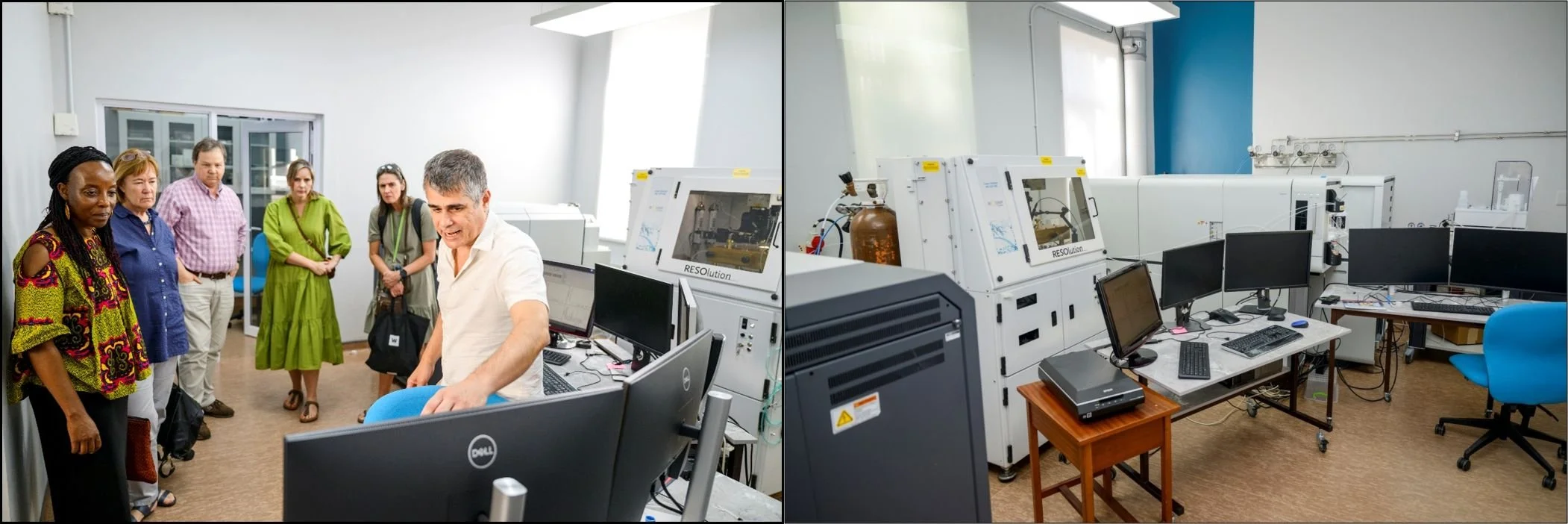
The new MC-ICP-MS located in the Department of Earth Sciences, Stellenbosch University. Photo credits Stefan Els.
The workshop concluded with a lunch generously sponsored by Anatech. Following the morning speaker programme, attendees joined the launch of the new MC-ICP-MS (multi-collector inductively coupled plasma mass spectrometer). The launch event featured brief talks by key figures including Professor Sibusiso Moyo (DVC Research, SU), Gary Stevens (CAF Director), Roger Diamond (BIOGRIP Director) and Cris Lana (BIOGRIP-SUN MC-ICP-MS Senior Analyst). Guests were then treated to guided tours of the laboratory, followed by a relaxed social gathering hosted in the department.
Attendees had the rare opportunity to see the MC-ICP-MS laboratory up close, ask questions about its analytical capabilities, and engage with technical staff and researchers.
The success of the workshop and launch highlighted the increasing significance of isotope geochemistry in southern Africa. It also demonstrates the regional commitment to instrumentation, training, application and collaboration. We hope this rising interest will ignite innovative and diverse uses of the new facility resulting in meaningful advances in science and help cultivate a thriving, dynamic scientific community.